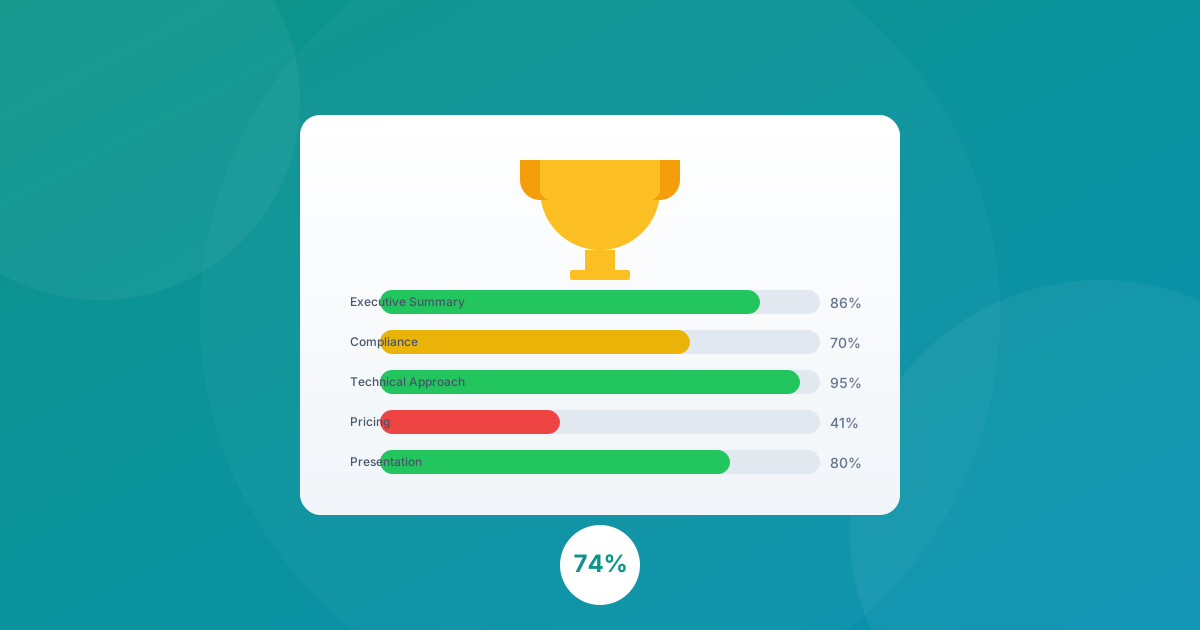


Take this 3-minute assessment to evaluate your proposal across the five dimensions that matter most to evaluators. Get your win probability score and actionable recommendations.

Before you hit submit on your next proposal, take 3 minutes to assess your chances. This calculator evaluates your proposal across the five dimensions that matter most to evaluators.
Based on analysis of thousands of winning (and losing) proposals, we've identified the key factors that separate winners from the rest. Answer honestly about your current draft to get your estimated win probability and actionable recommendations.
You'll answer 10 questions across five critical proposal dimensions:
Each answer is scored on a 4-point scale. Your final score determines your tier:
Be honest with your answers. Overestimating your proposal's quality won't help you win — it will just give you a false sense of security. The goal is to identify weaknessesbefore submission, while you still have time to fix them.
Answer all 10 questions honestly based on your current proposal draft. Your score will reveal your estimated win probability.
1. Does your executive summary lead with the client's problem (not your company history)?
2. Does it include quantified outcomes or proof points from similar projects?
3. Have you addressed every mandatory requirement with explicit responses?
4. Do you reference RFP section numbers in your responses?
5. Does each proposed feature or solution tie to a specific client need?
6. Do you include a realistic implementation timeline with clear milestones?
7. Is every cost component itemized and explained (no bundled "lump sums")?
8. Have you shown total cost of ownership or multi-year projections?
9. Is your proposal visually scannable (clear headers, bullets, tables, whitespace)?
10. Have you had someone outside your team review it for clarity?
Your score is a starting point, not a final verdict. Here's how to use it:
Don't submit yet. Focus on the categories where you scored lowest. A proposal with major compliance gaps or an unfocused executive summary is likely to be eliminated early. Consider whether you have enough time to address the issues — if not, it may be worth passing on this opportunity to avoid damaging your reputation with a weak submission.
You have a real shot, but so do your competitors. Look at your category breakdown and focus your remaining time on the weakest areas. Even small improvements in compliance or presentation can move you from "middle of the pack" to "shortlist."
You're well-positioned. Use your remaining time for polish: proofread carefully, verify all attachments are complete, and have one more person review for clarity. Don't introduce major changes at this stage — you risk breaking something that's already working.
This 10-question assessment covers the fundamentals, but winning proposals get hundreds of small details right. That's where AI can help.
Craxy AI analyzes your proposal against comprehensive quality criteria, flags weak sections, and provides specific suggestions for improvement. Instead of guessing whether your executive summary is strong enough, you'll get concrete feedback in seconds.
Start your free trial and see how AI-powered proposal analysis can improve your win rate.
Start Free Trial